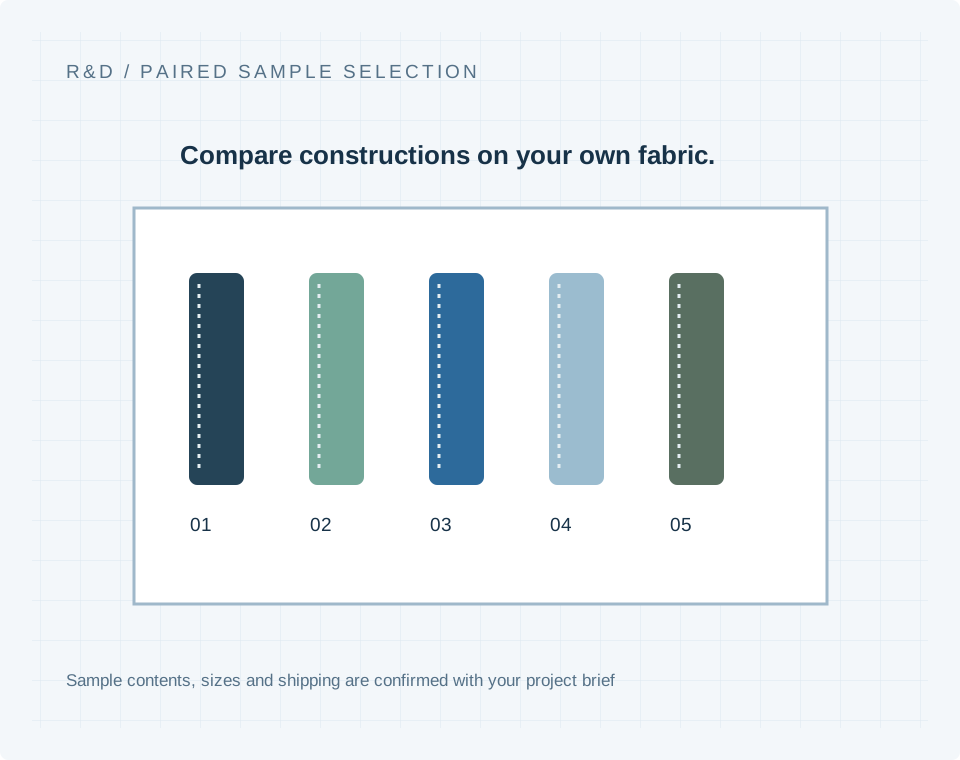
Map the user action
Describe reach, grip, orientation and the closing and opening sequence. Include gloves or assisted dressing if relevant.
Application / apparel & accessible dressing
Develop a closure that is easier to approach, grasp and release. Compare paired magnetic strip constructions on the real garment and with the intended user.
OEM components · matched A/B constructions · project-specific review
Application priorities
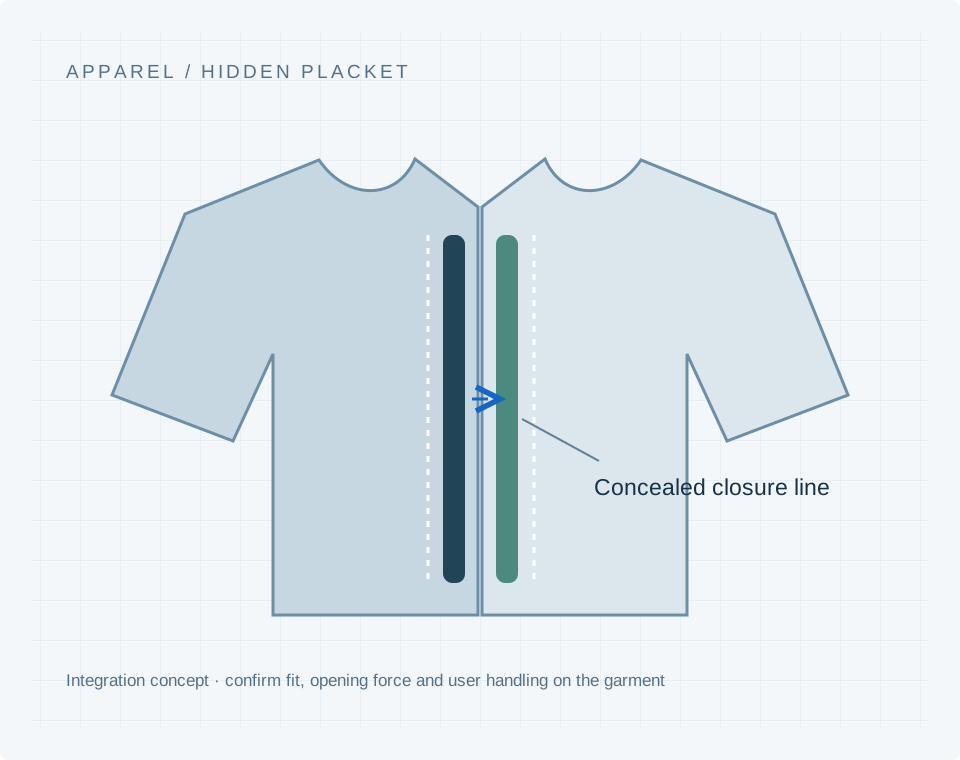
A magnetic closing action can reduce the need to align a small zipper starter. Accessible dressing still depends on reaching the opening, bringing the fabric edges together and deliberately releasing them afterwards.
For an adaptive coat, recovery garment or other accessible clothing project, start with the user’s reach, grip and movement. Then compare strip placement, the grasp tab, the fabric gap and the holding requirement. More magnetic force is not automatically more usable.
A continuous strip and an enclosed segmented cord will drape differently. Evaluate sitting, bending, reaching and garment overlap as well as a flat closing demonstration. Keep end retention and enclosure integrity in the same assessment.
Start here
A focused selection framework
Use the finished garment or bag as the test specimen. A bare magnetic strip is only one part of the result.
| Decision | What to evaluate | What to record |
|---|---|---|
| Starting alignment | Approach direction, overlap and fabric stiffness | Where the user starts and whether folds prevent full contact. |
| Opening action | Grip point, peel direction and one- or two-handed use | User feedback and the force in the intended action. |
| Movement | Sitting, bending, reaching and layered clothing | Gaps, local separation and seam distortion. |
| Drape | Carrier stiffness, segment layout and garment weight | Appearance and comfort on the finished pattern. |
| Care | Wash and dry conditions, enclosure and end retention | Changes in alignment, dimensions and exposed components. |
Your sample request
Integration & qualification
Describe reach, grip, orientation and the closing and opening sequence. Include gloves or assisted dressing if relevant.
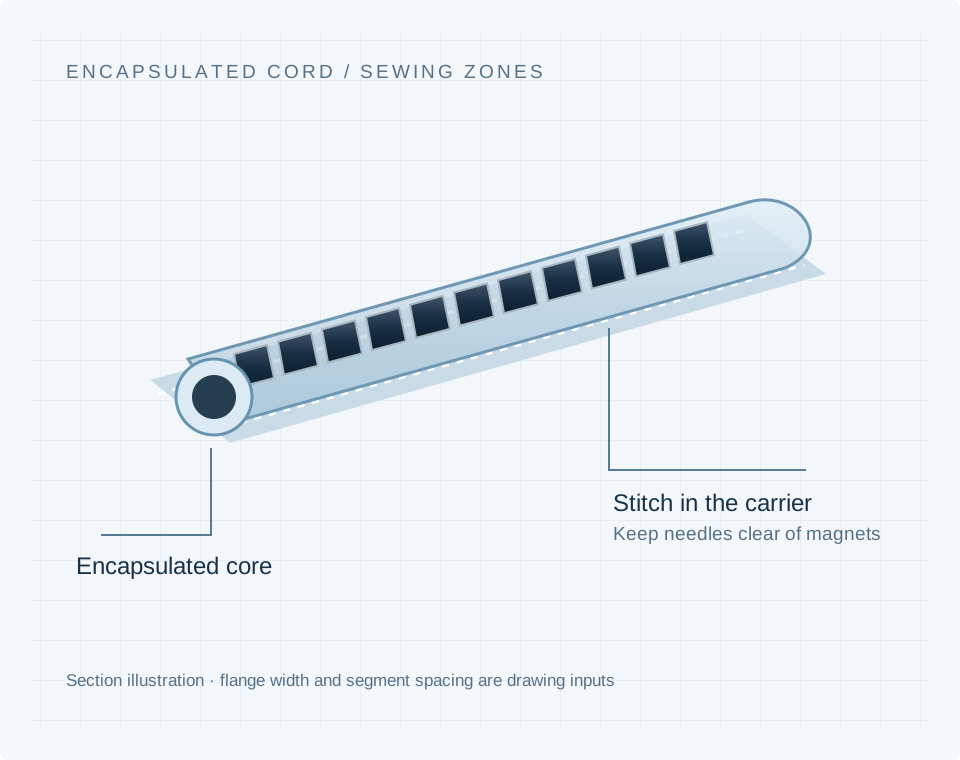
Use the intended facing, lining and reinforcement. Mark pair orientation and keep stitches clear of hard magnetic elements.
Assess the closure while worn, then repeat the agreed handling and laundering conditions on the assembly.
Include magnet retention, accessibility and any implanted-device considerations in the product team’s assessment.
Construction shortlist
01 / MZS-CordConcealed sew-in construction
A sleeved magnetic core for plackets, piping channels and discreet bag openings.
Explore the construction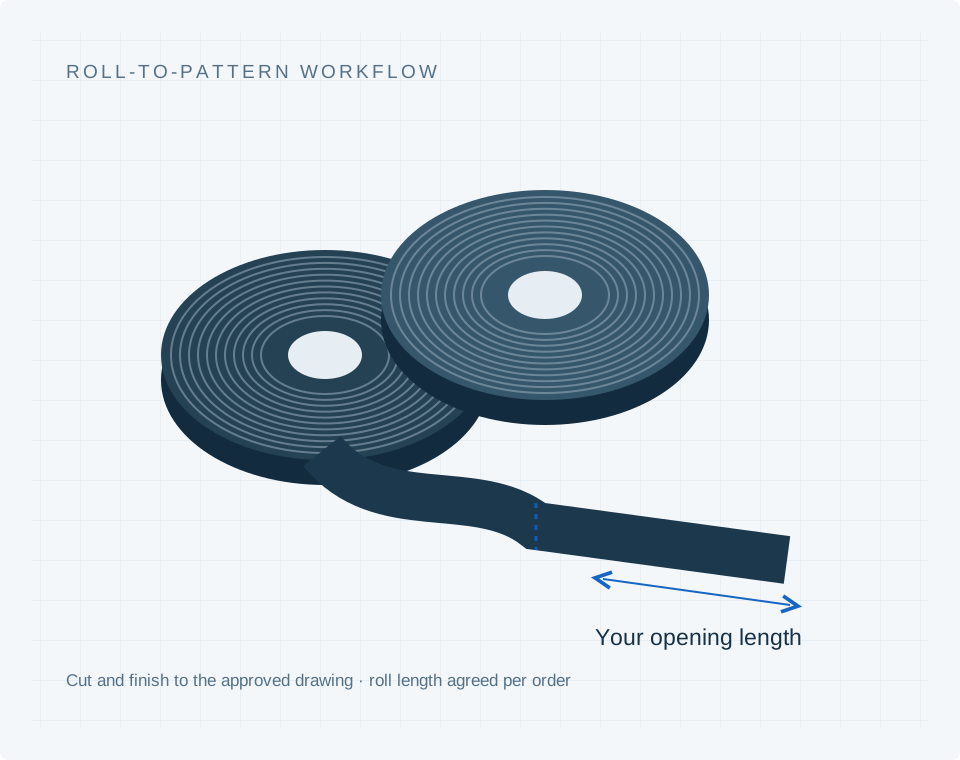 02 / MZS-FlexTape
Continuous strip construction
Continuous paired strip formats for pattern-led lengths and repeatable OEM assembly.
Explore the construction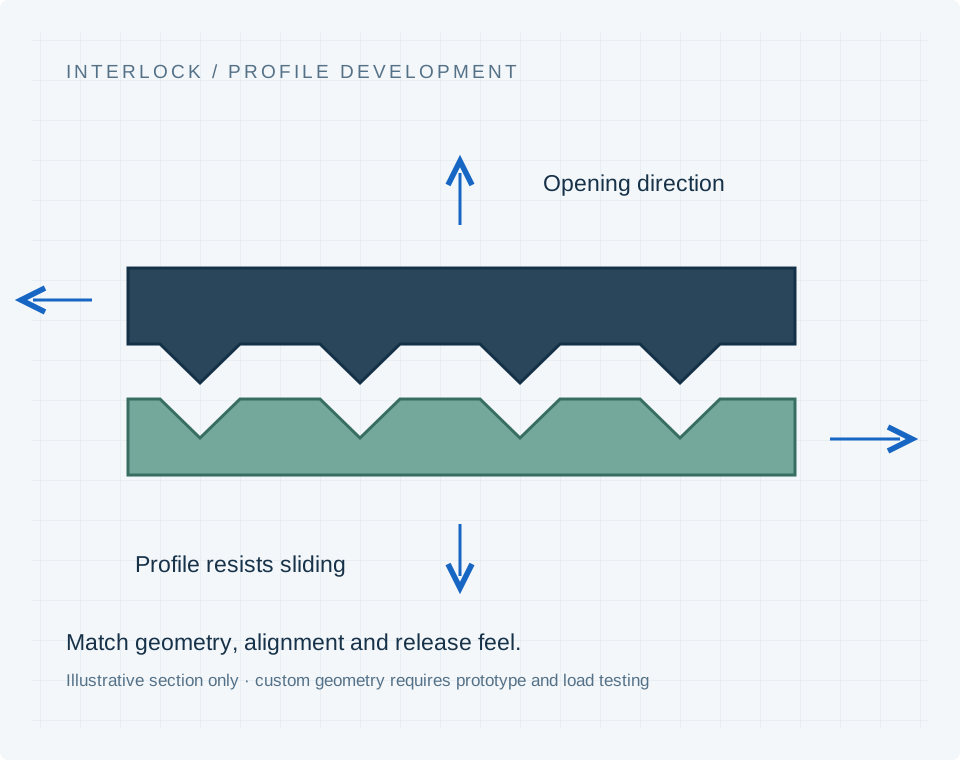 03 / MZS-Interlock
Profile-assisted retention
Explore shaped mating surfaces when lateral movement matters as much as closing force.
Explore the constructionBuyer questions
No universal one-handed outcome is claimed. Reach, grip, overlap and the finished fabric construction determine the actual experience. Evaluate it with the intended user and document the closing and opening action.
MagZipStrip focuses on OEM closure components and integration. Use the inquiry form for garment-development samples rather than a retail coat order.
No compatible replacement starter or authorised brand relationship is implied. Magnetic-assisted toothed zippers and toothless strip assemblies use different mechanisms; send a drawing or photograph if you need to compare the architecture.
Children’s products require a separate assessment of magnet retention, enclosure damage, foreseeable use and the intended market’s product requirements. A sewn-in magnet is not automatically safe if the enclosure or seam can fail.
Magnetic fasteners can be relevant to implanted-device compatibility. Follow the device manufacturer’s instructions and involve the wearer’s healthcare professional. No medical compatibility is established by a strip sample or shielding concept.
R&D sample selection
Share the opening length, fabric stack and intended use. Discuss a paired sample selection before committing to a production specification.
Sample contents, availability and shipping are confirmed for your project.