Design for lateral load
Define the direction of slip and the amount of relative movement permitted before choosing a mating geometry.
MZS-Interlock™ / Profile-assisted retention
Explore shaped mating surfaces when lateral movement matters as much as closing force.
OEM components · matched A/B constructions · project-specific review
Start with the construction
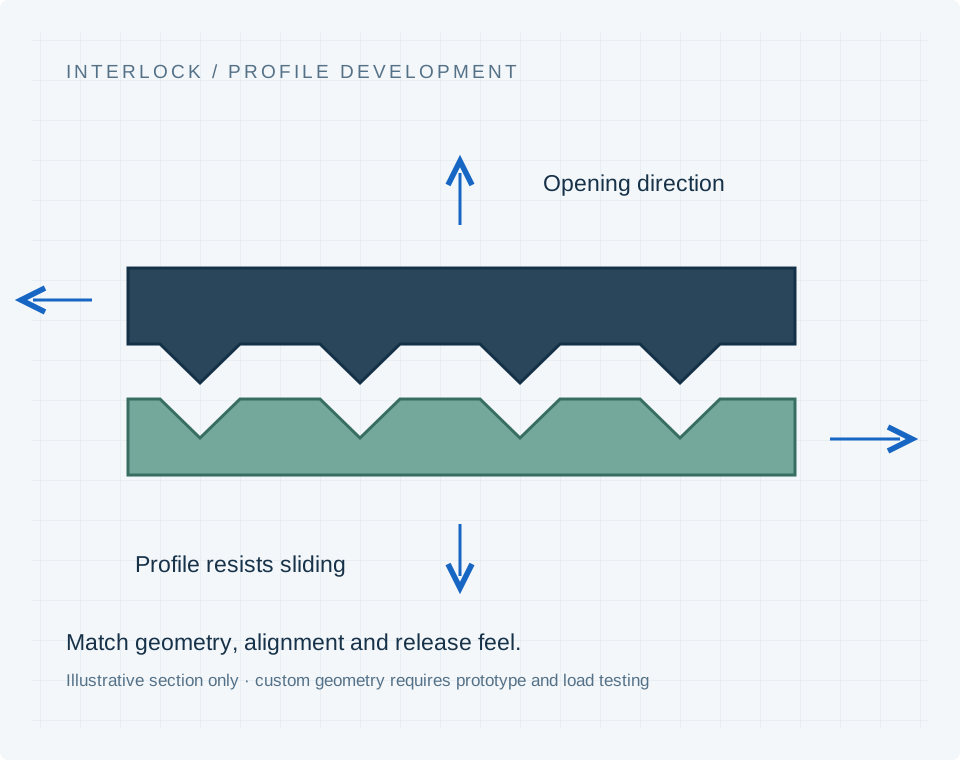
A closure can feel strong when pulled straight apart and still slide when a loaded bag or a moving garment pulls along the seam. Treat these as different load cases.
A shaped mating profile adds a geometry decision to the magnetic circuit. Evaluate alignment, engagement depth, bending and peel release together. MZS-Interlock is the development route for this architecture; final dimensions and retention values come from the agreed prototype and test plan.
Application shortlist
Design choices
Define the direction of slip and the amount of relative movement permitted before choosing a mating geometry.
Check that a deliberate peel or opening action stays manageable after the geometry is engaged.
Surface profile, magnetic core and carrier must bend and recover together without lifting the mating surfaces.
Drawing & RFQ inputs
These are the inputs to a sample review. Material, dimensions and acceptance values are confirmed in the agreed drawing and quotation.
| Item | Specify in the brief | Why it matters |
|---|---|---|
| Mating geometry | Section drawing, engagement depth and allowed mismatch | A profile sketch is not a retention rating. |
| Lateral loading | Load direction, specimen length and allowed displacement | Record force and movement together. |
| Opening action | Peel direction, grip point and target opening force | Avoid a secure closure that the intended user cannot release. |
| Bending | Minimum working radius and loaded curvature | Check engagement when the bag or garment is no longer flat. |
| Prototype scope | Tooling route, sample length and revision | Confirm a development sample before production commitments. |
From a strip to an assembly
Mark normal pull, lateral movement and intended peel opening on the seam drawing.
Compare candidate sections against engagement depth, thickness and cleanability.
Include the real fabric and end restraints so that the test reflects the assembly.
Record shear displacement, pull separation and peel opening as separate results.
Buyer questions
No slider-driven zipper chain is implied. The proposed architecture uses magnetic mating with a shaped interface; the exact profile and operation must be agreed during development.
No universal force value is published. A force result only applies to the tested section, specimen length, attachment, fixture and loading direction.
Do not select it for personal protection, restraint or another safety-critical function from a website description. The complete product needs its own engineering and approval process.
Potentially. Send the section and expected volume so that prototype methods, tooling scope, ownership and revisions can be discussed before a production order.
Compare adjacent routes
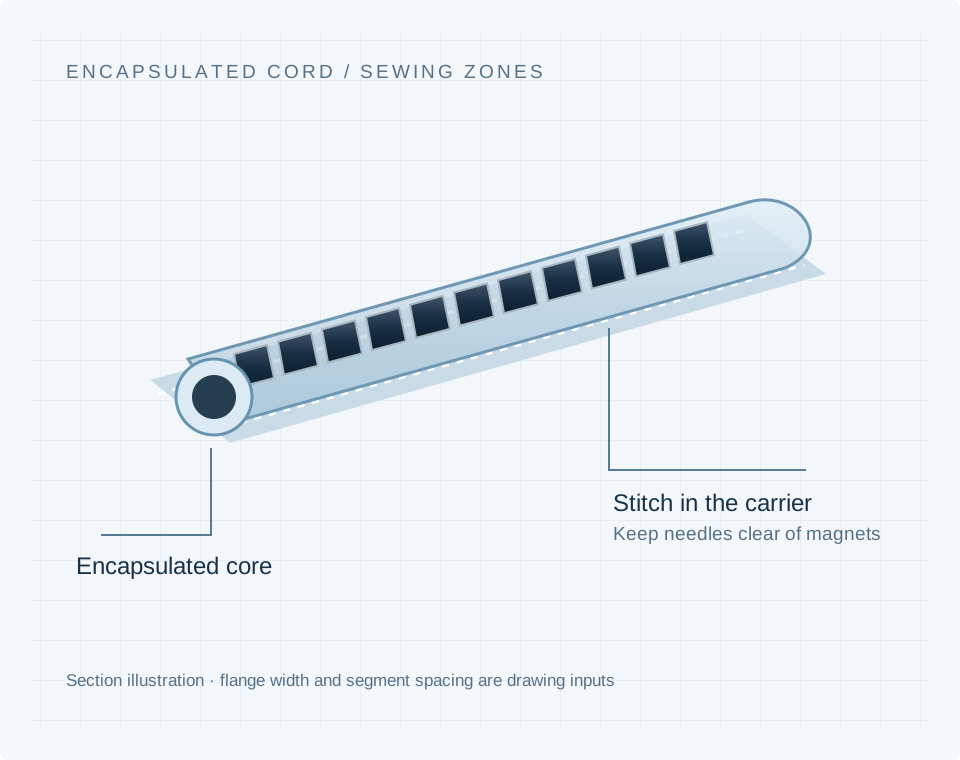 01 / MZS-Cord
Concealed sew-in construction
A sleeved magnetic core for plackets, piping channels and discreet bag openings.
Explore the construction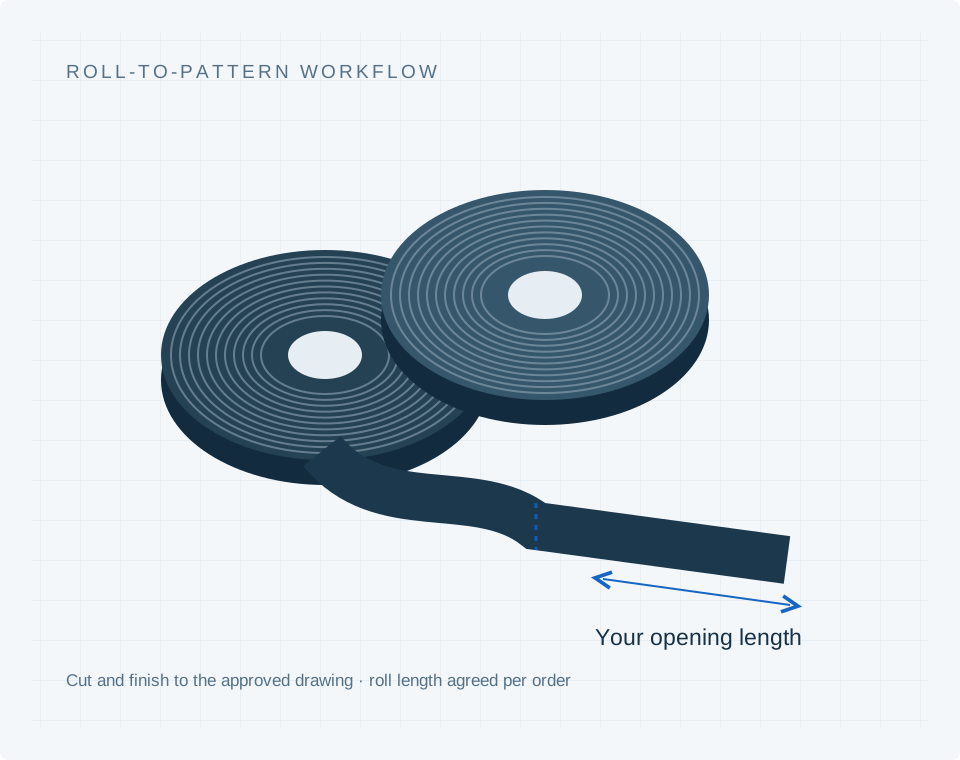 02 / MZS-FlexTape
Continuous strip construction
Continuous paired strip formats for pattern-led lengths and repeatable OEM assembly.
Explore the construction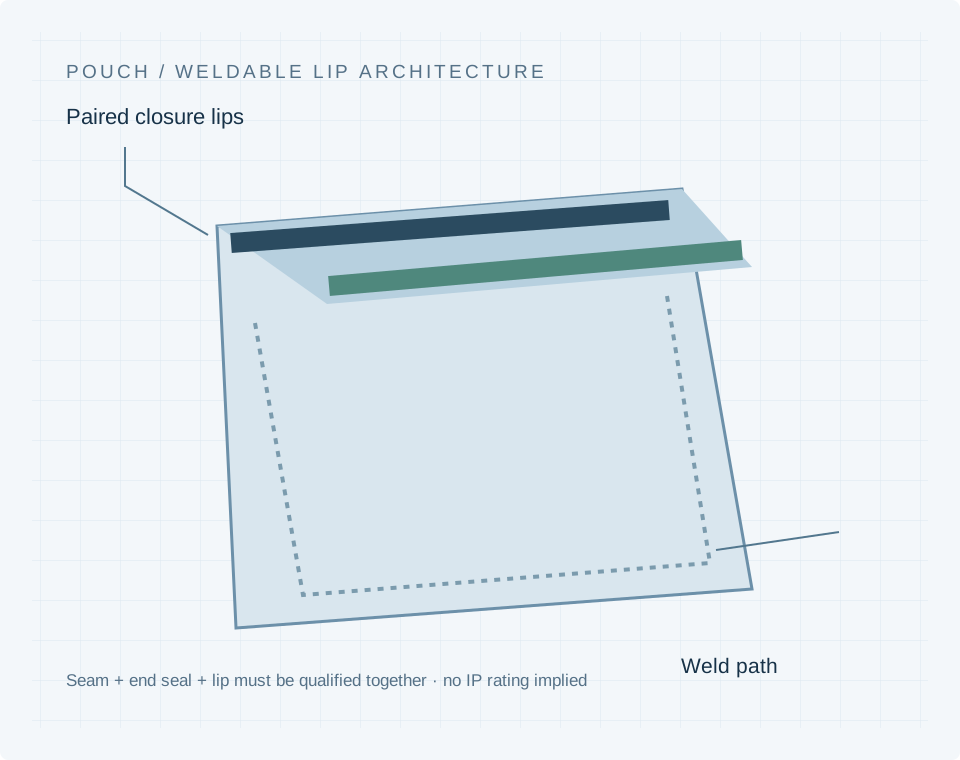 03 / MZS-Hermetic
Weldable lip development
Plan the magnetic lip, sealing surface and welded bag construction as one system.
Explore the constructionR&D sample selection
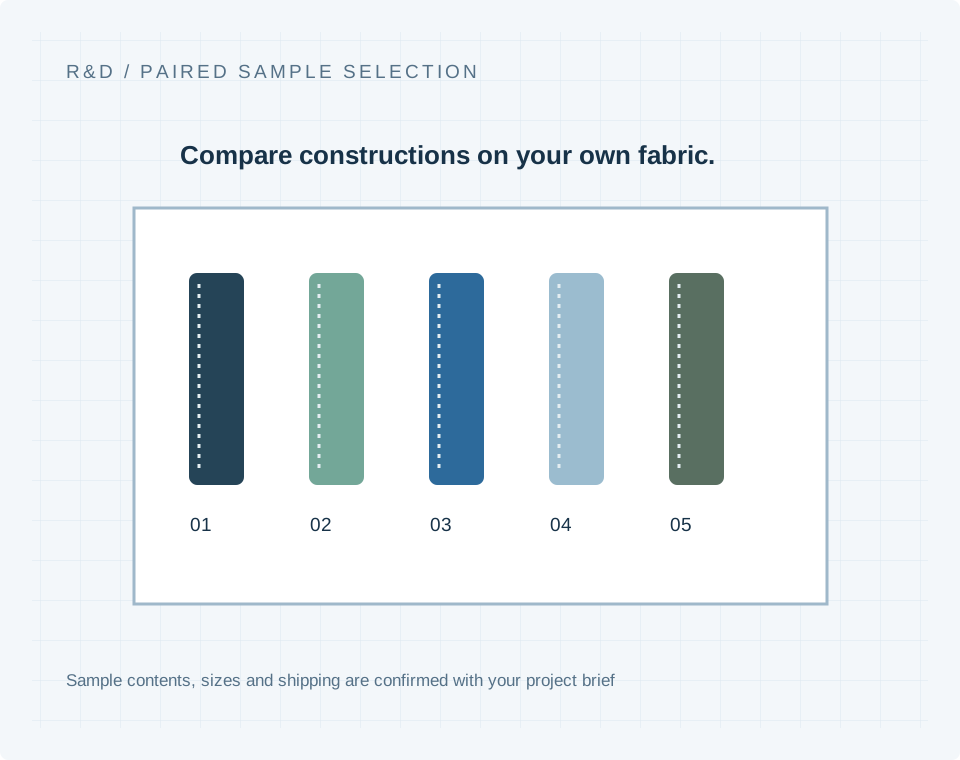
Share the opening length, fabric stack and intended use. Discuss a paired sample selection before committing to a production specification.
Sample contents, availability and shipping are confirmed for your project.