Brief & feasibility
Share the opening, fabric, load direction and care or exposure requirements. Identify which inputs are fixed and which remain open.
OEM / a controlled route to the sample
Define the interface, select the construction, evaluate a representative sample and release a revision-controlled specification. Start with your pattern and the intended use.
OEM components · matched A/B constructions · project-specific review
Development sequence
Share the opening, fabric, load direction and care or exposure requirements. Identify which inputs are fixed and which remain open.
Compare the magnetic core, carrier, enclosure, joining method and A/B arrangement. Discuss prototype and tooling scope where applicable.
Use the intended material stack. Record alignment, opening feel, seam condition and the project’s agreed qualification results.
Approve the sample and drawing revision. Agree material identity, inspection, pair labelling, packaging and commercial terms.
What can be specified
| Area | Project inputs | Release record |
|---|---|---|
| Magnetic construction | Material, section, magnetic face, pole pattern and matching pair | Material declaration, drawing and sample identification. |
| Carrier & enclosure | Fabric or film, sleeve, stitch margins, backing and end detail | Section drawing and integration work instruction. |
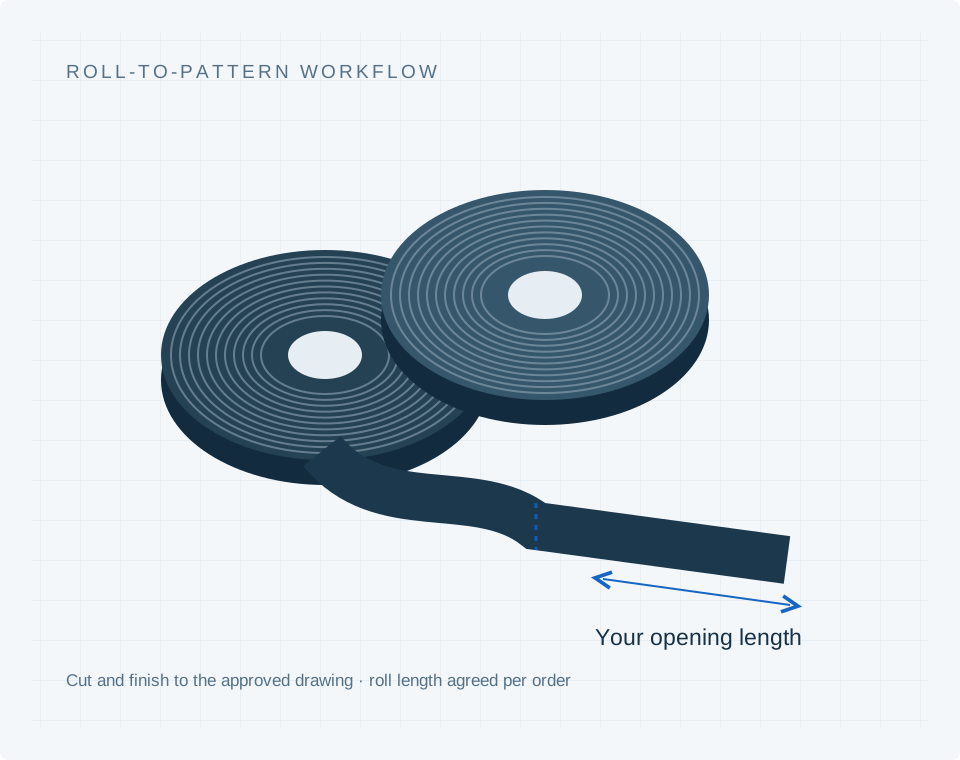
| Length preparation | Roll format, paired lengths, cut points, tolerances and joint policy | Paired-unit definition and cutting/packaging instructions. |
| Joining process | Sewing, a fabric channel, lamination or a qualified welded lip | Approved sample, process window and acceptance checks. |
| Qualification | Opening action, loads, use cycles, care and environment | Project-specific test plan and results. |
| Commercial delivery | Sample scope, tooling, quantity, freight and shipment terms | Written quotation and order confirmation. |
Procurement clarity
A metre of one strip is not the same unit as a metre-long matched A/B set. A raw magnetic profile is not the same scope as an enclosed, labelled and cut-length sample.
State the same construction and acceptance requirements across quotations. Include tooling, end finishing, sample work, packaging and shipment assumptions in the comparison.
Build the RFQ brief →Production consistency
Keep the core, enclosure and carrier identity tied to the approved drawing. Treat substitutions as changes requiring review.
Agree A/B labels, winding direction and the handling method for cut pieces. Trace each assembly batch to its material lot.
Record the agreed checks, sample method and packaging. Protect pair identification and avoid damaged or exposed cut ends.
Buyer questions
MOQ depends on the material, section, carrier, supply format and any tooling. Send the sample and production quantity so the scope can be reviewed; no single MOQ is claimed across every construction.
The timeline depends on available sections, prototype work, tooling, material sourcing and qualification. The quotation should state the assumptions and milestones for your project.
Include the confidentiality and drawing-handling requirements in your first email before sending sensitive technical information. The applicable arrangement is agreed in writing.
No. The actual fabric, seams, end detail and intended use need evaluation. Keep component selection and finished-product approval as separate project milestones.
R&D sample selection
Share the opening length, fabric stack and intended use. Discuss a paired sample selection before committing to a production specification.
Sample contents, availability and shipping are confirmed for your project.