Define the exposure
State whether the requirement is access, rain, splash, immersion or pressure. Include the stored contents and orientation.
Application / pouch lips & outdoor soft goods
Plan the closure lip, fabric stack and joining process together. Define splash, immersion and pressure requirements before choosing a magnetic strip construction.
OEM components · matched A/B constructions · project-specific review
Application priorities
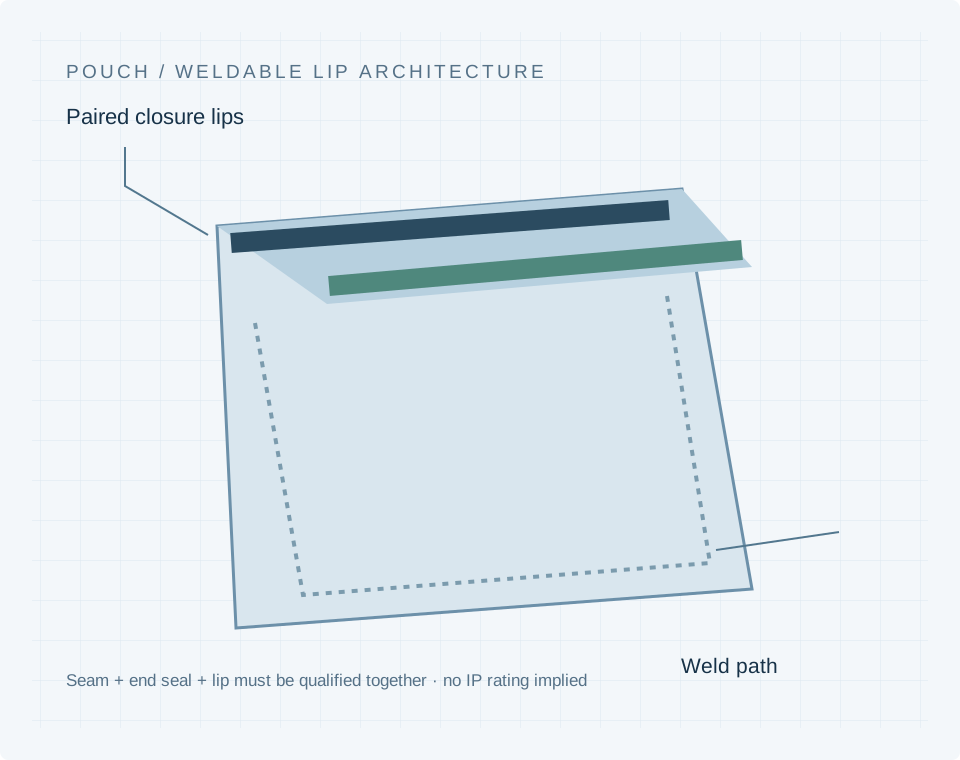
A bike pouch, a golf bag organizer and an immersion pouch do not ask the same thing of a closure. Some need quick one-handed access under a flap. Others need a defined sealing face and a fully qualified bag construction.
Start with the opening width, fabric or film, corner details and expected exposure. Compare how the closure behaves when the pouch is loaded, folded, contaminated or closed imperfectly. The ends and seams deserve the same attention as the straight magnetic section.
For a welded construction, include the actual coated textile or membrane and production joining method. A film material label does not by itself establish a compatible weld window, drinking-water suitability or a finished-product water rating.
Start here
A focused selection framework
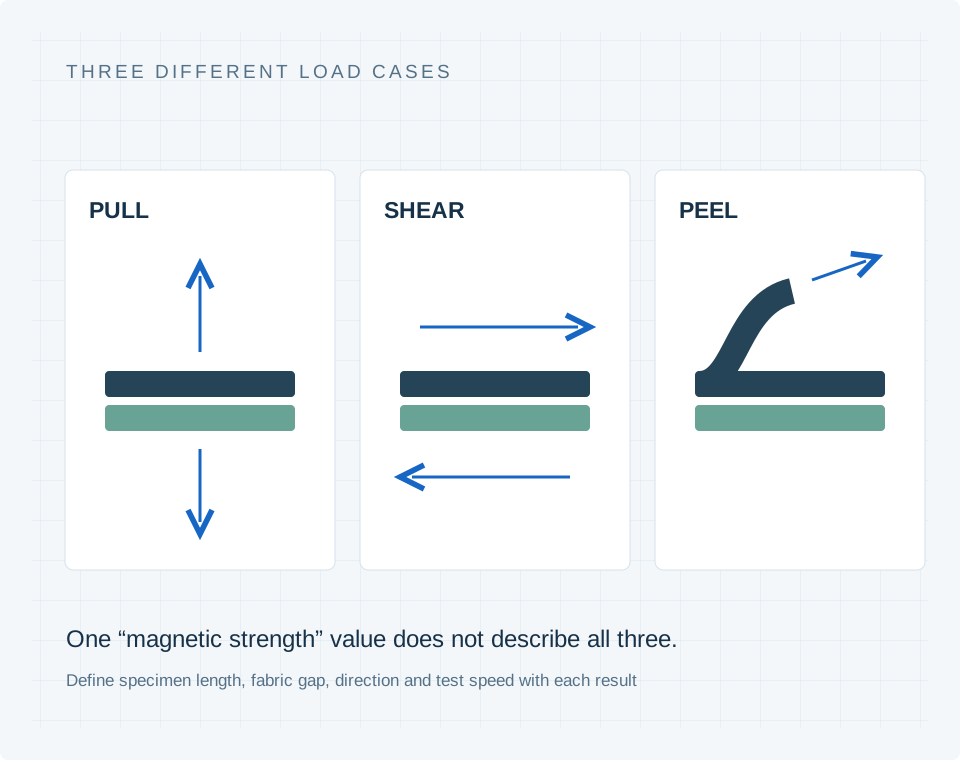
Use the finished garment or bag as the test specimen. A bare magnetic strip is only one part of the result.
| Decision | What to evaluate | What to record |
|---|---|---|
| Everyday access pouch | Closing feel, loaded shape and opening action | The expected load and how the user reaches the contents. |
| Rain or splash use | Flap overlap, drainage path, seams and closure ends | Exposure direction, duration and acceptance definition. |
| Immersion requirement | Whole-pouch lip, film, corners and all joints | Depth or pressure, duration and the finished-product test method. |
| Hydration or food contact | All contacting materials, joining and cleaning | Market, contact conditions and the required evidence. |
| Repeated folding | Lip recovery, encapsulation and seam stress | Fold locations and the agreed conditioning sequence. |
Your sample request
Integration & qualification
State whether the requirement is access, rain, splash, immersion or pressure. Include the stored contents and orientation.
Include the closure lips, corners, terminal seals and a representative section of the bag wall.
Record the material, tooling and qualified production settings. Assess seam strength and damage around the magnetic elements.
Repeat the agreed leak and handling assessment after opening cycles, folding and environmental exposure.
Construction shortlist
 01 / MZS-FlexTape
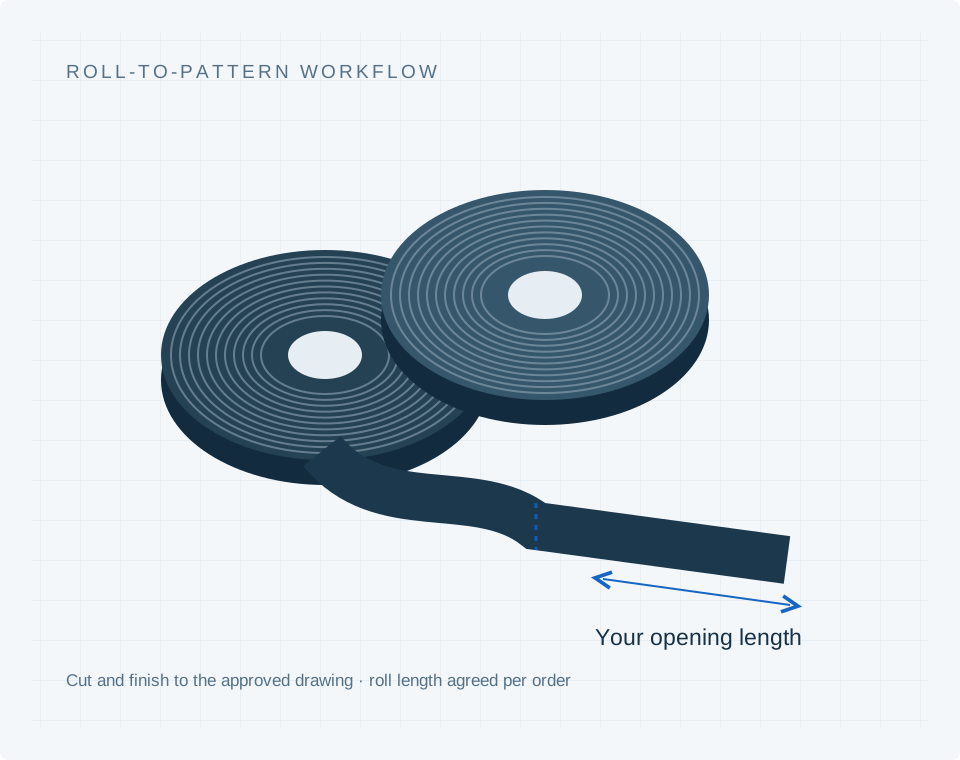
Continuous strip construction
Continuous paired strip formats for pattern-led lengths and repeatable OEM assembly.
Explore the construction02 / MZS-HermeticWeldable lip development
Plan the magnetic lip, sealing surface and welded bag construction as one system.
Explore the constructionBuyer questions
No. Magnetic attraction and a waterproof sealing path are different properties. The lip, membrane, seams, folds and end details need to work together in the finished product.
No. Those claims require a defined finished product and its corresponding test conditions and evidence. Include the intended exposure in your project brief.
Choose the process from the material stack and sealing requirement. A sewn attachment may suit a covered access opening, while a sealing membrane requires its own qualified joining and end-seal design.
A drinking-water reservoir requires separate assessment of contact materials, cleaning, joining and finished-product suitability. No food- or water-contact approval is inferred from an enclosure material name.
No brand affiliation, interchangeable replacement part or licence is implied. A custom magnetic lip project must be reviewed on its own construction and intellectual-property requirements.
R&D sample selection
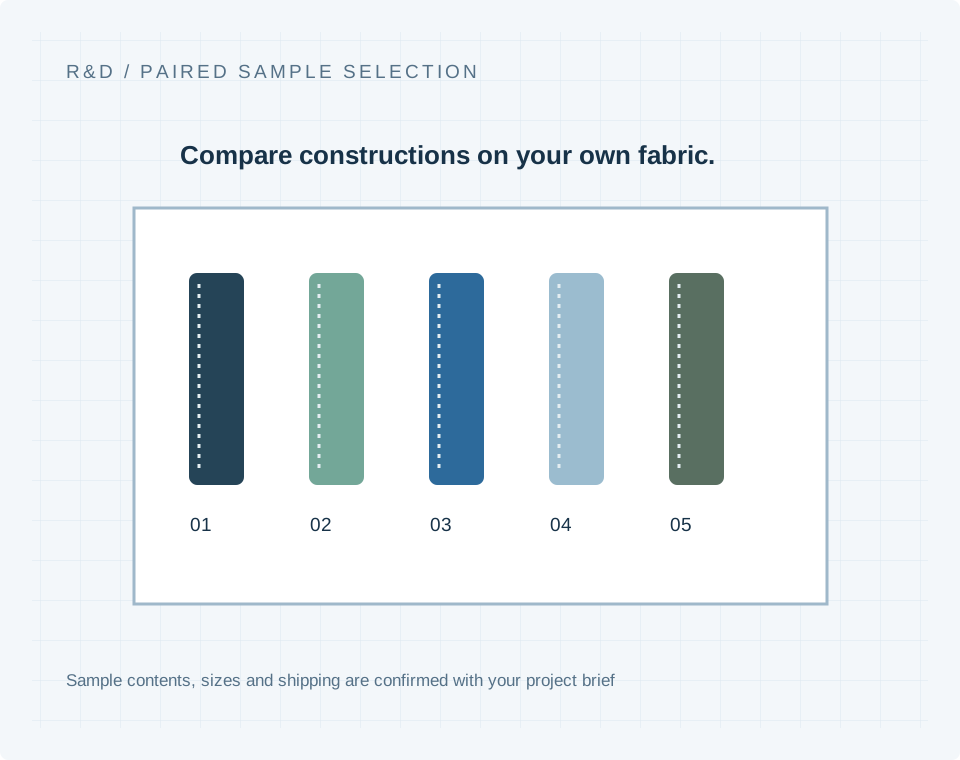
Share the opening length, fabric stack and intended use. Discuss a paired sample selection before committing to a production specification.
Sample contents, availability and shipping are confirmed for your project.