Specify the sound test
Compare an agreed opening action, microphone distance and ambient background rather than an unqualified “silent” label.
MZS-SilentTac™ / Quiet outdoor closure development
Develop the flap feel, sound and equipment separation together for outdoor carrying systems.
OEM components · matched A/B constructions · project-specific review
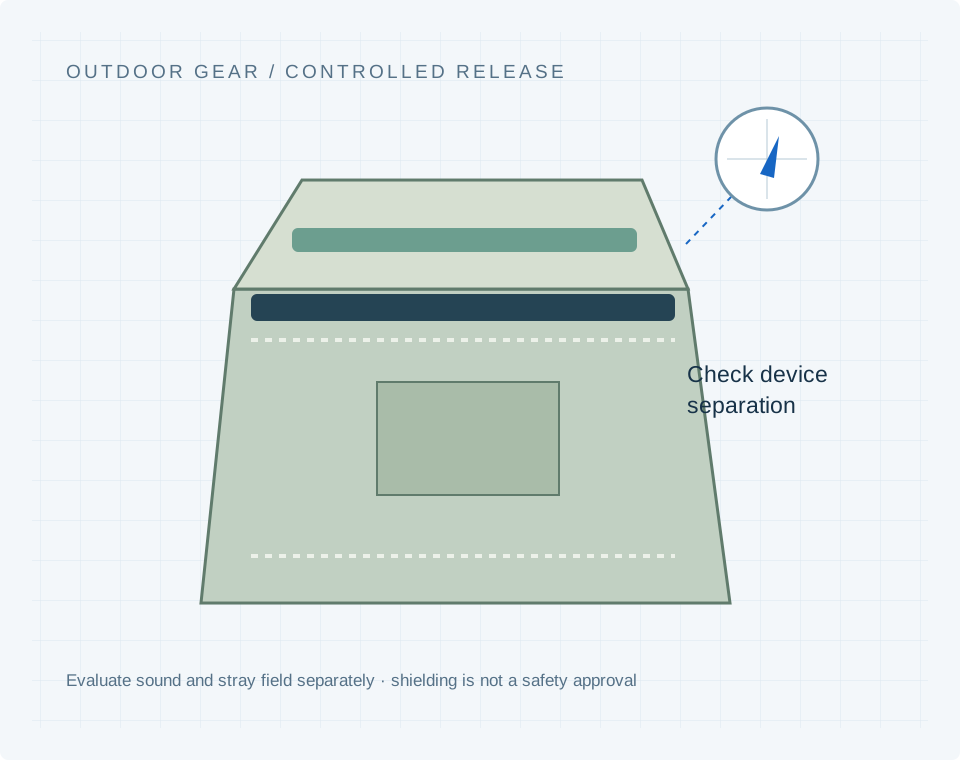
Start with the construction
A quiet outdoor closure needs more than removing hook-and-loop. Magnetic contact, fabric rubbing, buckles and the way a user releases the flap can all contribute to sound.
The MZS-SilentTac route brings fabric-covered closure development and equipment-compatibility questions into one brief. Compare release feel and sound on the bag, then evaluate stray field and the required distance from compasses or other affected equipment. No zero-noise or zero-interference promise is made.
Application shortlist
Design choices
Compare an agreed opening action, microphone distance and ambient background rather than an unqualified “silent” label.
Evaluate glove thickness, tab position and a deliberate opening motion on the loaded pouch.
Assess the actual nearby device and orientation. A shielding concept is not a compass or implanted-device clearance.
Drawing & RFQ inputs
These are the inputs to a sample review. Material, dimensions and acceptance values are confirmed in the agreed drawing and quotation.
| Item | Specify in the brief | Why it matters |
|---|---|---|
| Flap construction | Fabric, reinforcement, closure position and overlap | Evaluate contact and release on the finished flap. |
| Use conditions | Gloves, load, temperature and debris exposure | Confirm the closure stays usable outside the sample bench. |
| Acoustics | Action, microphone distance and comparison method | Record background sound with the measurement. |
| Stray field | Measurement positions, orientations and distance | Match the test to the actual equipment carried nearby. |
| Release | Grip tab, opening direction and holding requirement | Balance quick deliberate access with accidental opening resistance. |
From a strip to an assembly
Identify compasses, sensors and other magnet-sensitive items around the closure.
Include the reinforcement, lining and padding that change the closing gap.
Use the intended gloves, loaded bag and repeatable opening action.
Keep the device-specific field assessment separate from retention and acoustic results.
Buyer questions
No. It is a working series name for quiet-closure development. Fabric movement and magnetic contact still need evaluation with an agreed acoustic method.
Do not assume that. Compatibility depends on the complete magnetic circuit, distance, orientation and actual equipment. Test the finished carrying setup.
No implanted-device compatibility is established by this page. Follow the device manufacturer’s instructions and discuss magnetic fasteners with the wearer’s healthcare professional.
State that requirement before development. A nonmagnetic closure may be the appropriate solution; quiet handling alone is not a reason to accept magnetic interference.
Compare adjacent routes
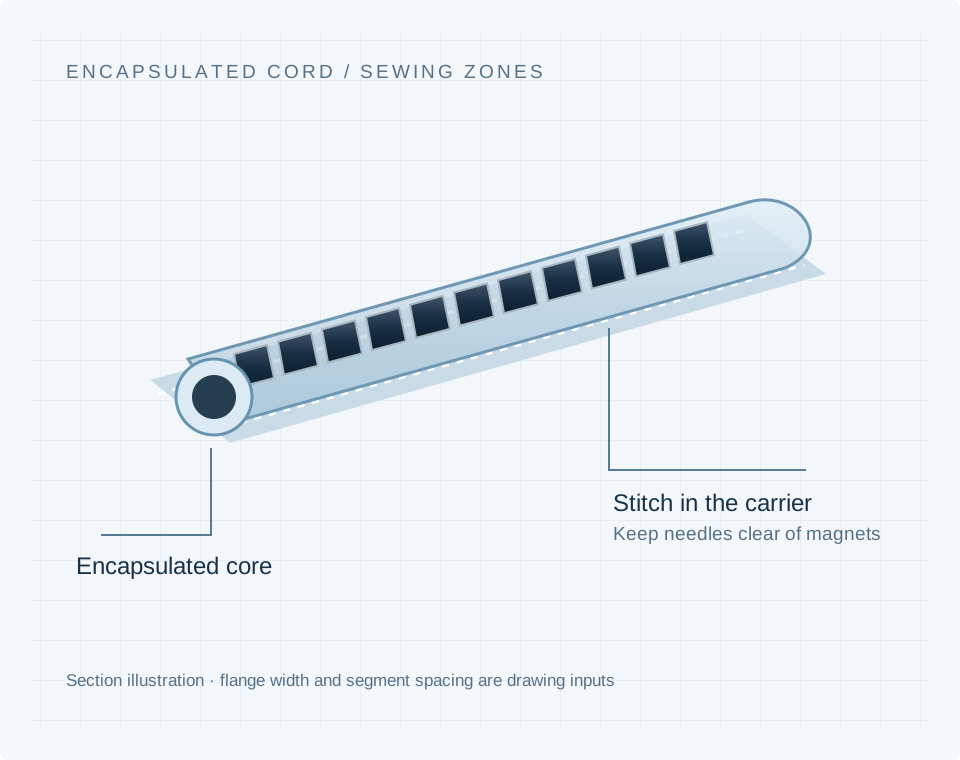 01 / MZS-Cord
Concealed sew-in construction
A sleeved magnetic core for plackets, piping channels and discreet bag openings.
Explore the construction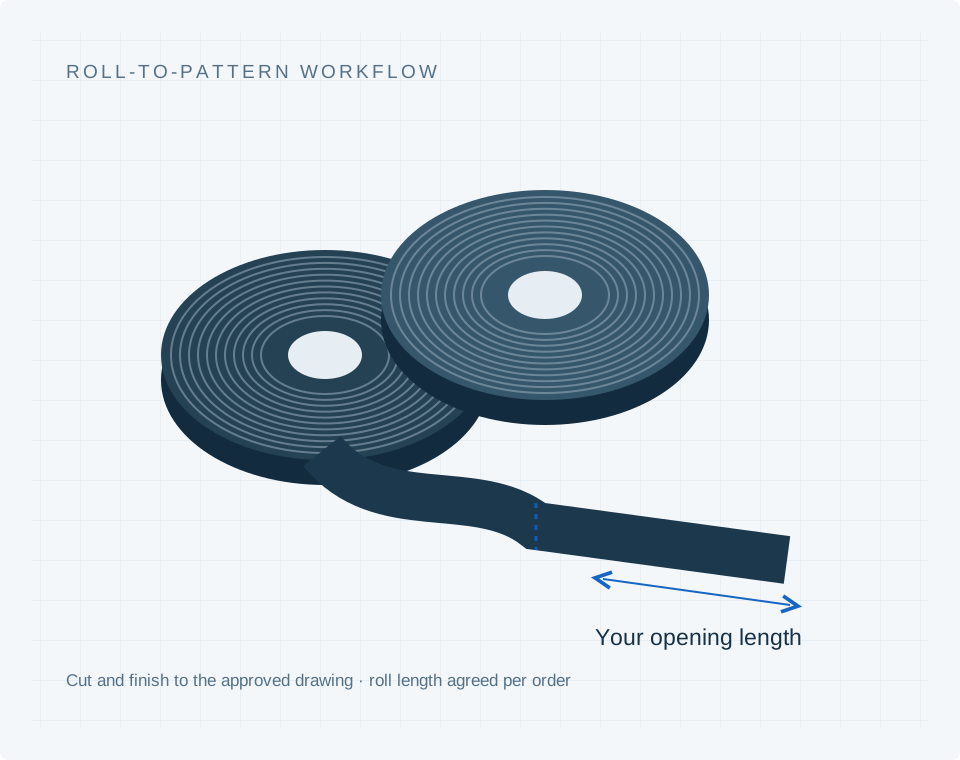 02 / MZS-FlexTape
Continuous strip construction
Continuous paired strip formats for pattern-led lengths and repeatable OEM assembly.
Explore the construction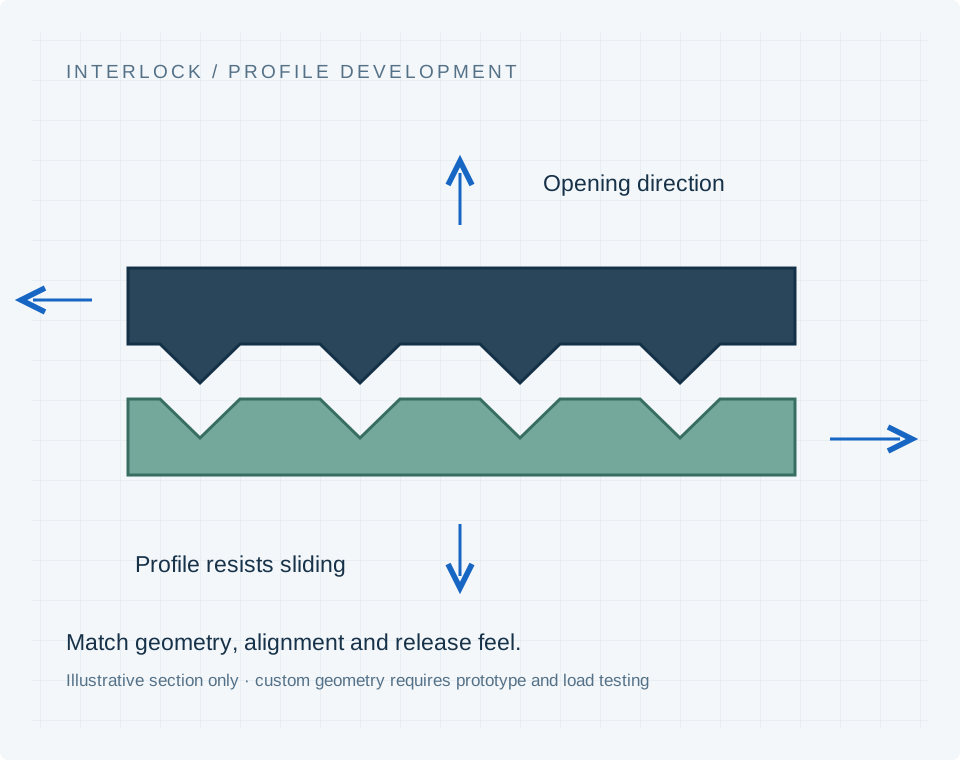 03 / MZS-Interlock
Profile-assisted retention
Explore shaped mating surfaces when lateral movement matters as much as closing force.
Explore the constructionR&D sample selection
Share the opening length, fabric stack and intended use. Discuss a paired sample selection before committing to a production specification.
Sample contents, availability and shipping are confirmed for your project.