Conceal the hardware
Place the assembly inside a folded placket or channel so that the outer fabric carries the visual design.
MZS-Cord™ / Concealed sew-in construction
A sleeved magnetic core for plackets, piping channels and discreet bag openings.
OEM components · matched A/B constructions · project-specific review
Start with the construction
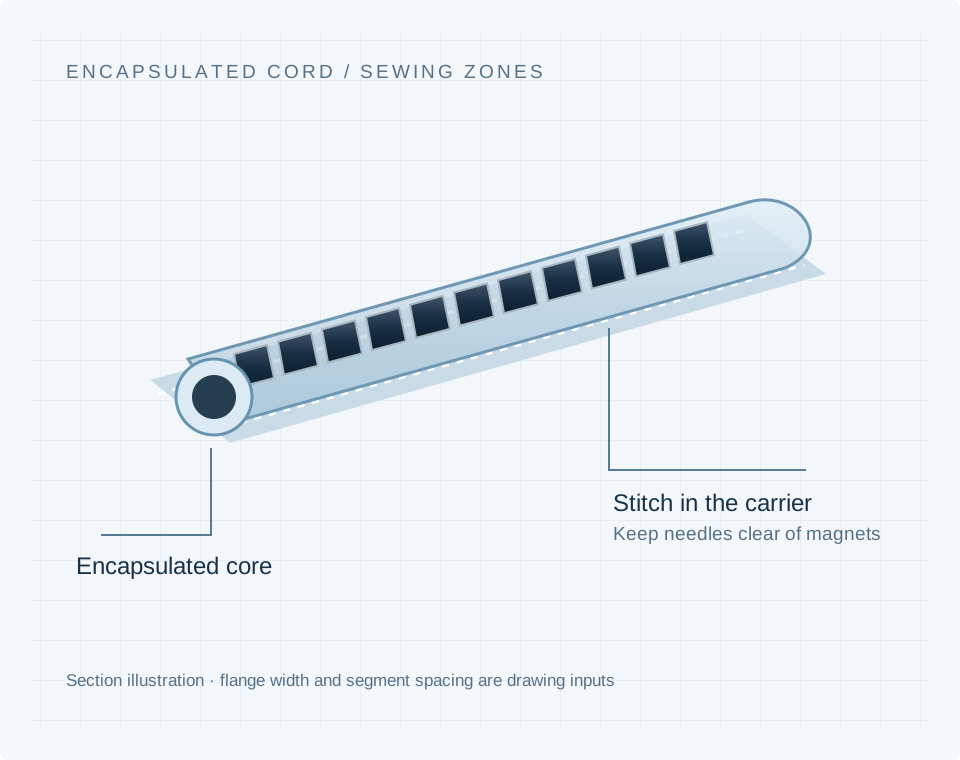
Build the closure into the seam rather than around an exposed slider. A sleeved cord construction places the magnetic elements inside a flexible enclosure, with a carrier or fabric channel handling the stitching.
Start with the actual seam cross section. Core diameter, enclosure thickness, segment spacing and the fabric between the paired sides all change how the closure bends, aligns and opens. Select them together rather than choosing a magnet in isolation.
Application shortlist
Design choices
Place the assembly inside a folded placket or channel so that the outer fabric carries the visual design.
Keep the stitch path in the approved carrier area. The needle must not enter a hard magnetic element.
Segment layout and enclosure construction let you compare drape, hinge points and closure continuity on your pattern.
Drawing & RFQ inputs
These are the inputs to a sample review. Material, dimensions and acceptance values are confirmed in the agreed drawing and quotation.
| Item | Specify in the brief | Why it matters |
|---|---|---|
| Core and sleeve | Core diameter, enclosure material and total section | Check bulk against the finished seam allowance. |
| Segment layout | Magnet length, spacing and matched polarity sequence | Check drape and closure continuity at curved sections. |
| Carrier | Stitch margin, carrier width and approved needle path | Keep stitches clear of the magnetic core. |
| Cut ends | Allowed cut locations and end-retention method | Prevent movement or escape of internal elements. |
| Fabric gap | Number of layers and compressed thickness | Compare the force in the actual sewn stack. |
From a strip to an assembly
Show both fabric folds, the intended stitch line and the total finished thickness.
Retain the matching direction when cutting and feeding each side into its channel.
Use the approved end-retention detail; do not cut through a hard magnet or leave an open sleeve.
Check closure feel, bending, repeated handling and laundering on the finished assembly.
Buyer questions
The stitch path belongs in the specified fabric carrier or a separate sewn channel. Do not stitch through a hard magnetic core. Agree the clearance and presser-foot arrangement on the integration drawing.
Cut locations depend on the internal layout. Define the permitted gap between elements and the end-sealing or retention method before production cutting.
No. A magnetic profile becomes a closure system only after its A/B pairing, enclosure, seam and load behavior have been evaluated together.
Send the opening length, a seam sketch, fabric layers and thickness, preferred enclosure, intended care cycle and the approximate sample quantity.
Compare adjacent routes
 01 / MZS-FlexTape
Continuous strip construction
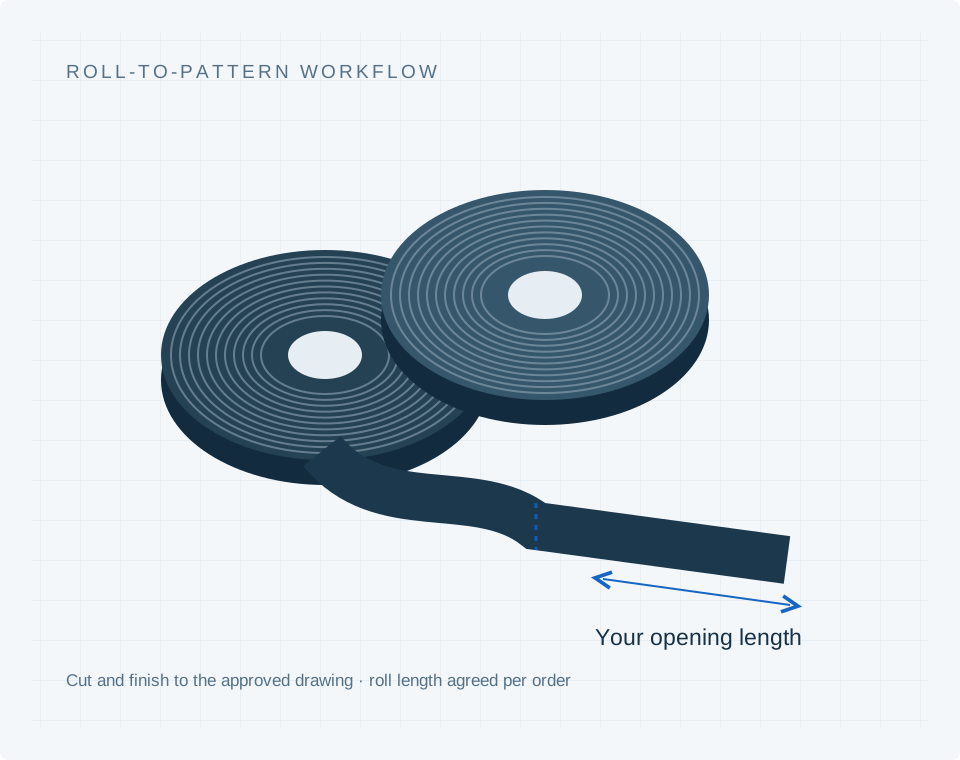
Continuous paired strip formats for pattern-led lengths and repeatable OEM assembly.
Explore the construction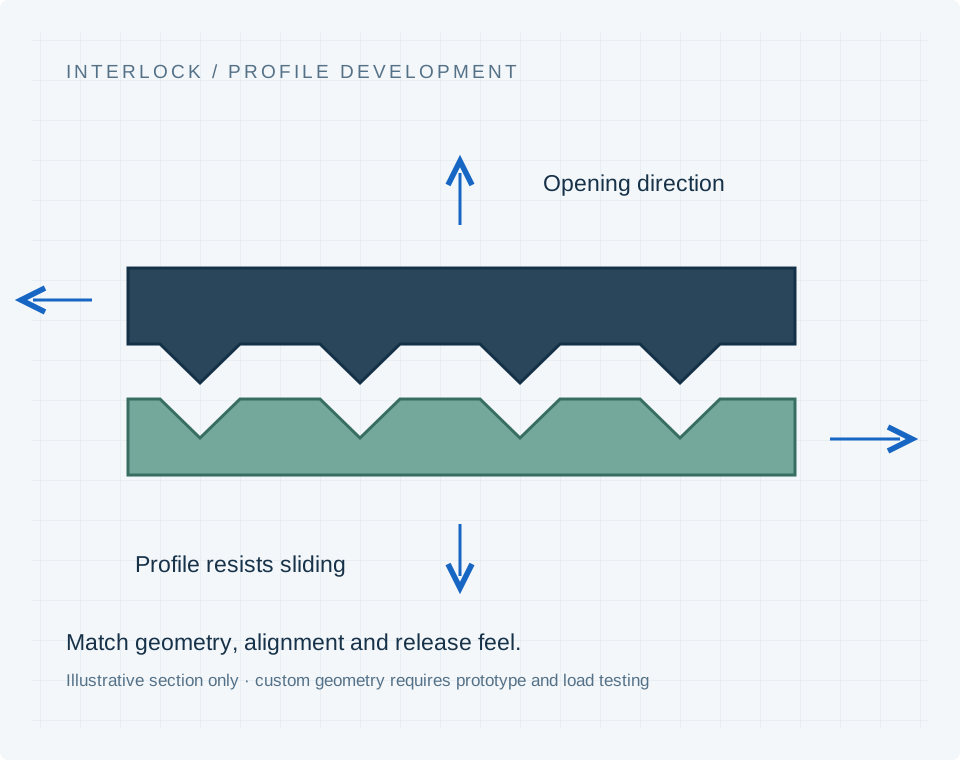 02 / MZS-Interlock
Profile-assisted retention
Explore shaped mating surfaces when lateral movement matters as much as closing force.
Explore the construction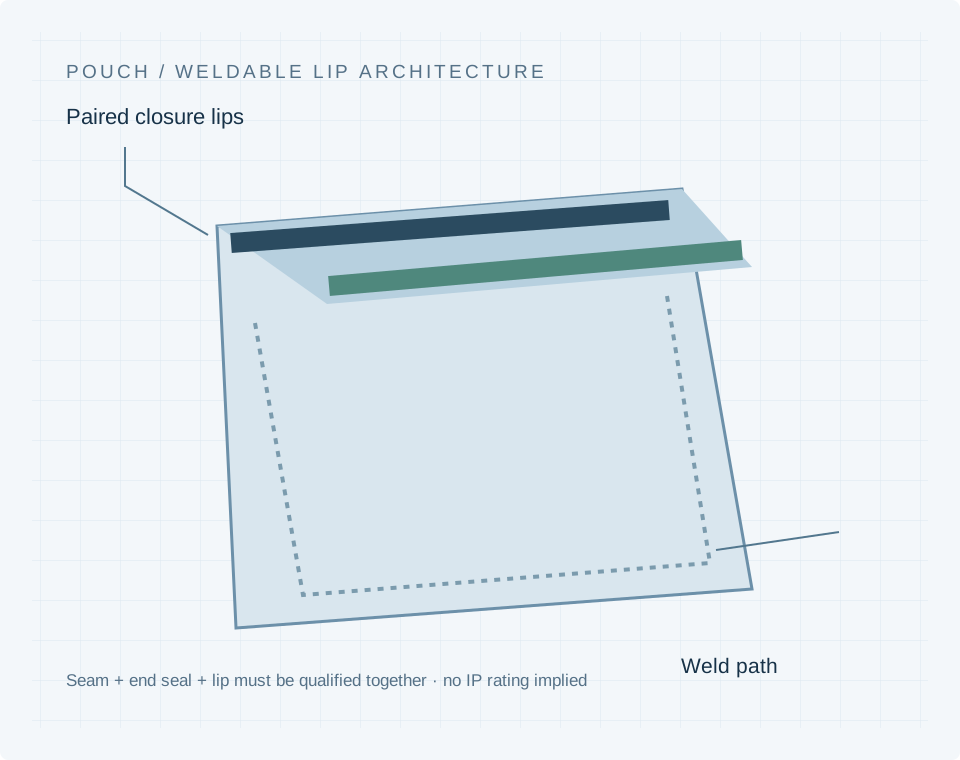 03 / MZS-Hermetic
Weldable lip development
Plan the magnetic lip, sealing surface and welded bag construction as one system.
Explore the constructionR&D sample selection
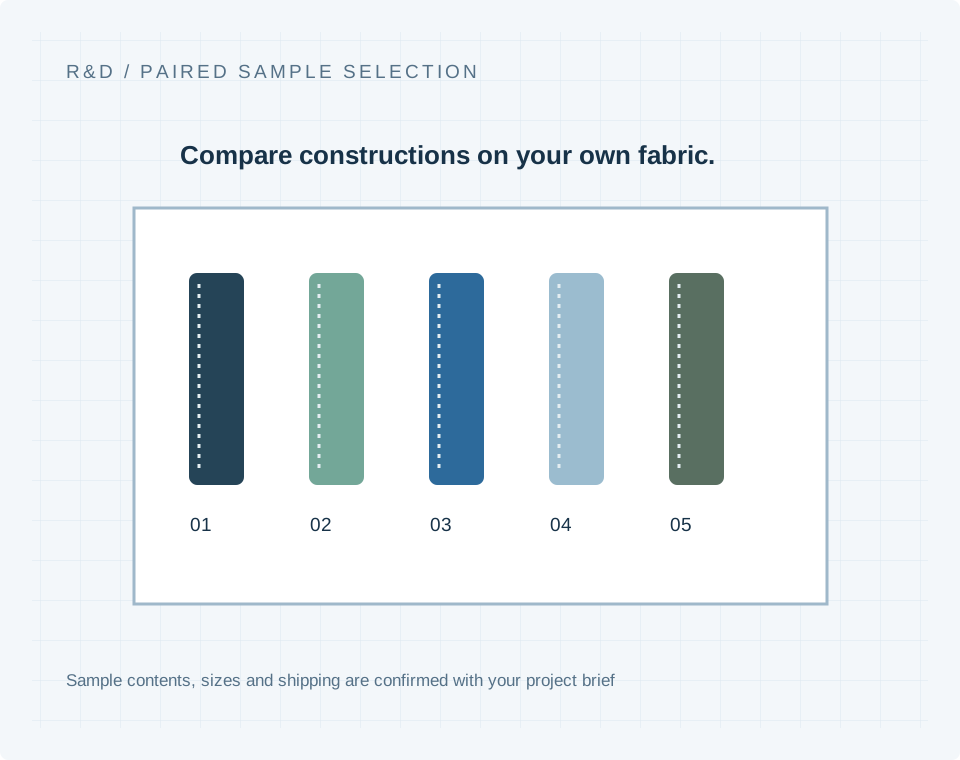
Share the opening length, fabric stack and intended use. Discuss a paired sample selection before committing to a production specification.
Sample contents, availability and shipping are confirmed for your project.