Draw both sides
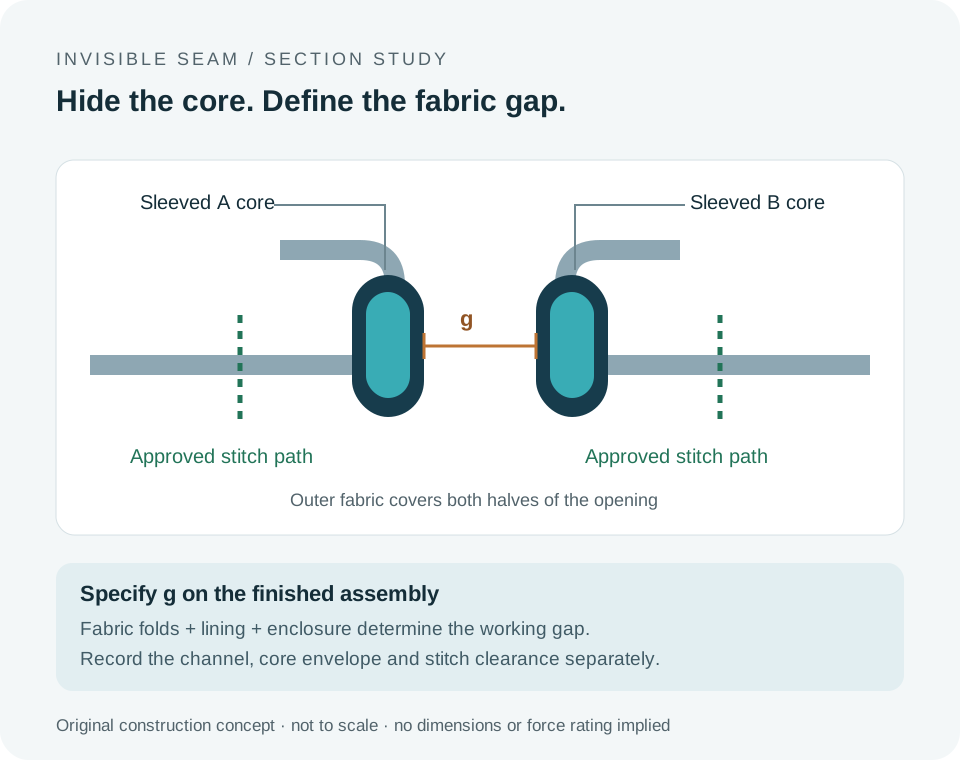
Mark the exterior, facing, lining, core, contact surface and needle line. Give the complete section to the sample team.
Application / technical apparel & leather goods
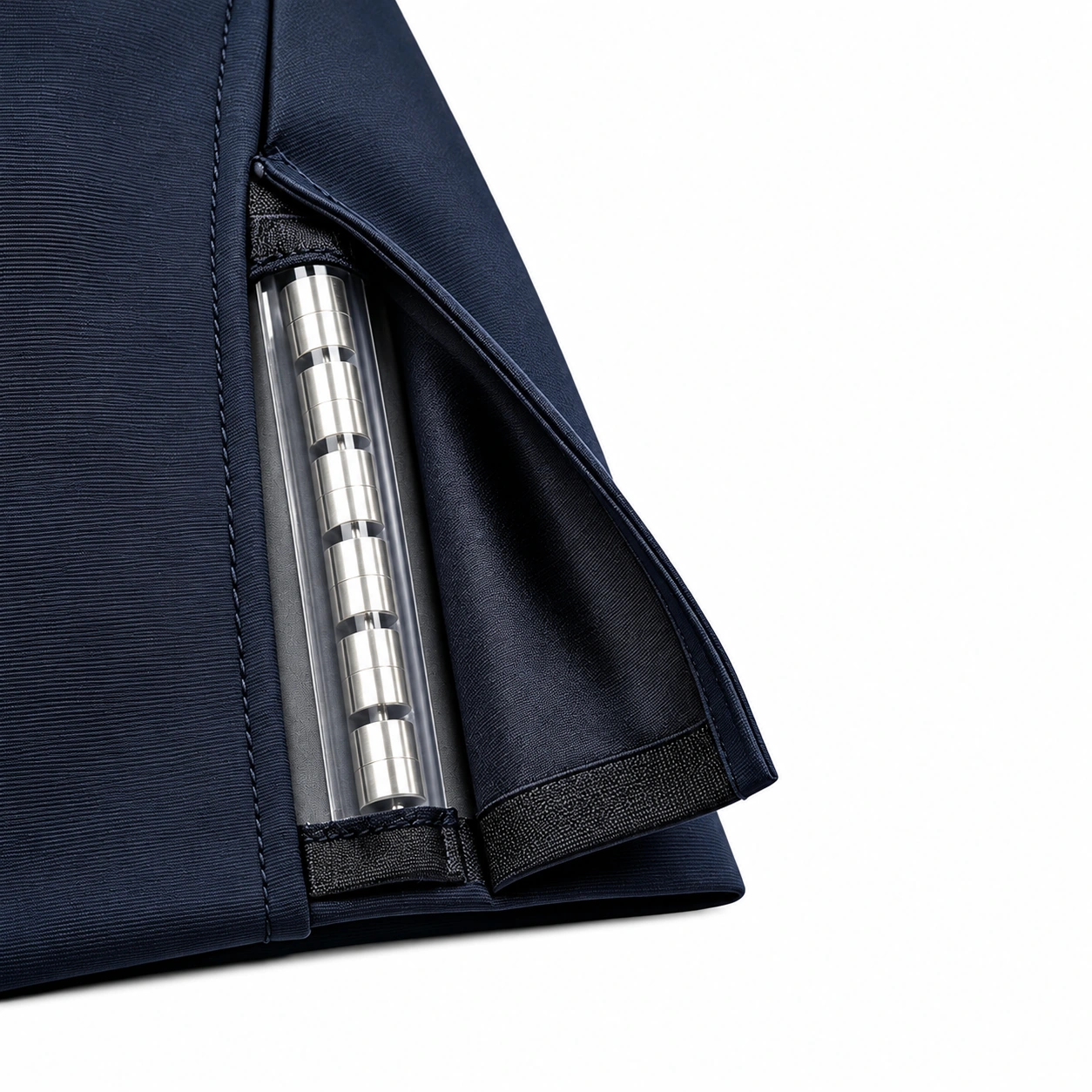
Conceal the closure inside a placket, piping channel or leather opening. Specify the fabric gap, channel and stitch path before choosing a paired magnetic cord or tape.
OEM components · matched A/B constructions · project-specific review
 Application reference
Application priorities
An invisible magnetic closure belongs inside the seam design. A piping channel can hide a rounded cord, while a broad folded placket may be a better starting point for flat tape. Both need enough space to bend without twisting the mating surfaces away from each other.
The hidden layers are part of the magnetic gap. Facing, lining, adhesive, sleeve walls and reinforcement can change the closing action. Send a section through both halves of the finished opening, including compressed layer thickness; fabric GSM alone cannot describe that gap.
For leather goods, compare a sewn channel with a recessed or skived construction on a small coupon first. Agree the remaining leather thickness and reinforcement with the leather-working team. A deeper groove may reduce bulk while also weakening the material around the seam.
Start here
Channel · enclosure · finished seam
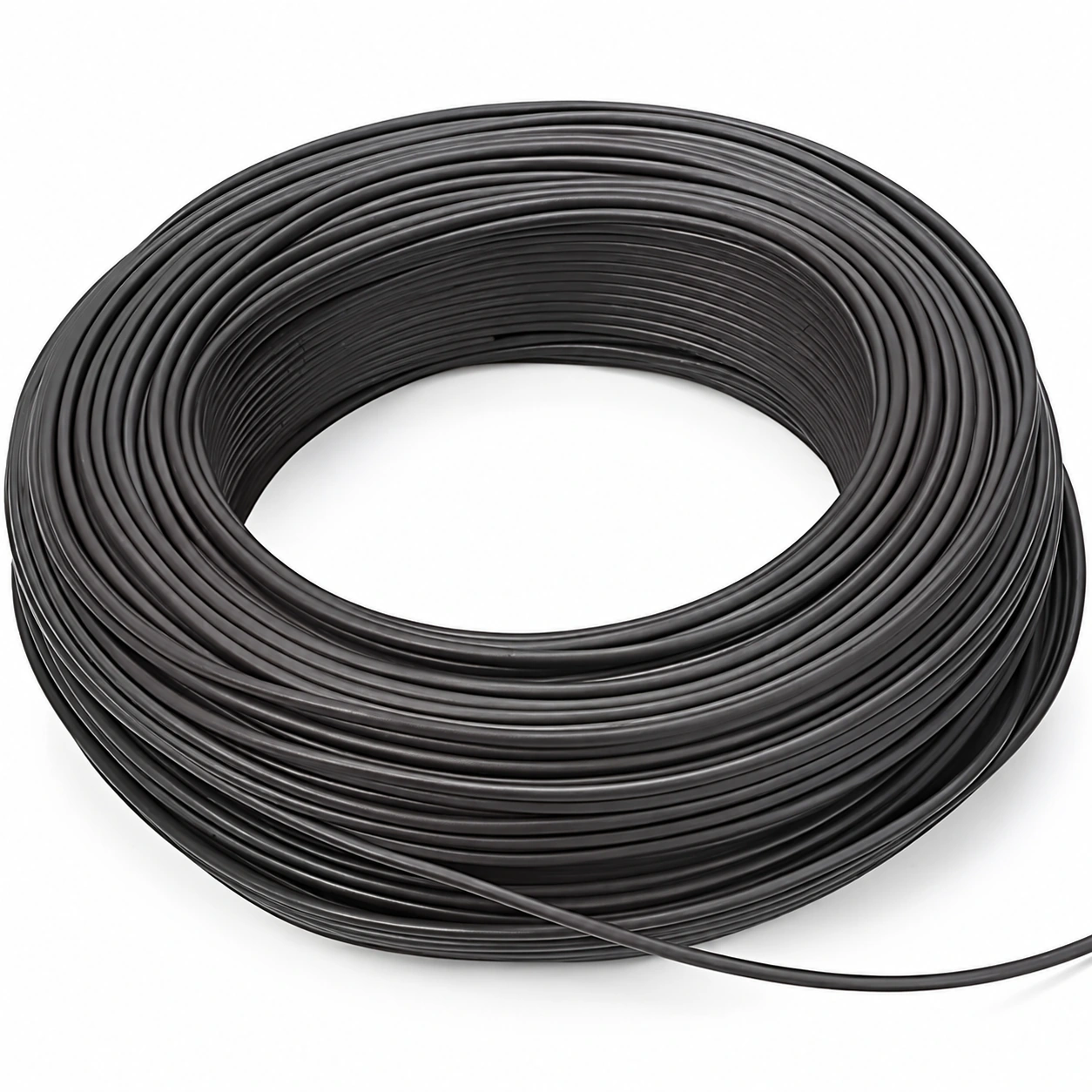
Use the reference views to identify the core format, enclosure and finished seam. Add dimensions and a real-material coupon to the sample brief.
 Material reference
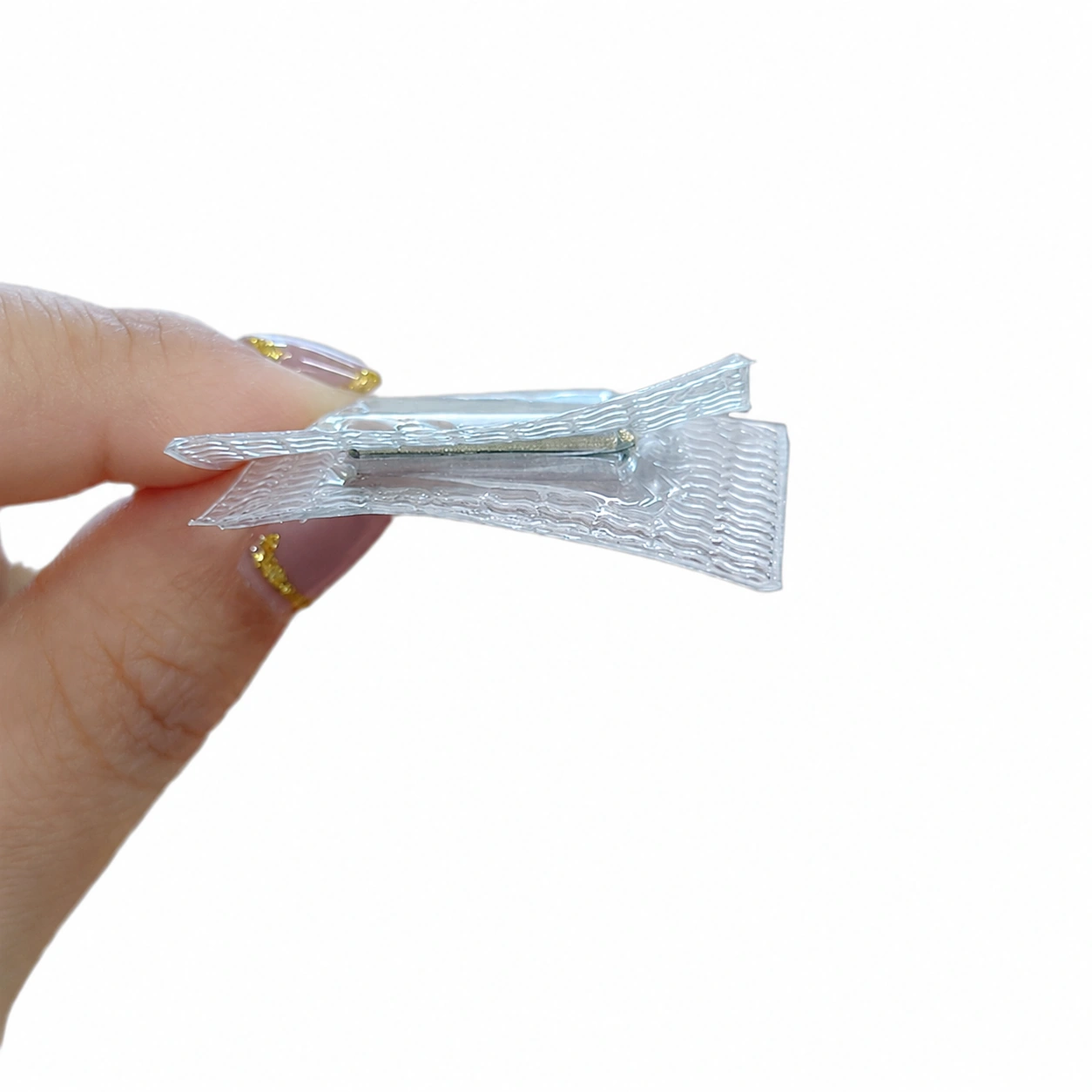 Component referenceApplication reference
Prepared material, component and application references. The selected construction and finished specifications are confirmed for your project.
A focused selection framework
Use the finished garment or bag as the test specimen. A bare magnetic strip is only one part of the result.
| Decision | What to evaluate | What to record |
|---|---|---|
| Lightweight outerwear | Flat carrier or low-bulk channel; local reinforcement and drape | Fabric GSM, compressed stack, seam appearance and peel action. |
| Piping or bound edge | Sleeved cord, channel clearance and bend transitions | Core envelope, channel width, curve radius and end restraint. |
| Leather flap or pocket | Recess, lining, reinforcement and remaining leather section | Leather thickness before/after preparation, stitching and loaded opening. |
| Long garment placket | A/B feed direction, enclosed segment positions and end allowance | Pattern length, active length, allowed cut positions and movement check. |
| Concealed soft-bag opening | Overlap and the way contents pull across the seam | Loaded gap, lateral displacement and accessible release tab. |
Your sample request
Integration & qualification
Mark the exterior, facing, lining, core, contact surface and needle line. Give the complete section to the sample team.
Use the intended fabric or leather and the proposed attachment. Compare straight, curved and folded portions of the opening.
Use the agreed cut position and enclosure restraint. Keep reinforcement stitches clear of every hard magnetic element.
Record appearance, drape, opening feel and loaded retention before and after the intended care or conditioning process.
Construction shortlist
 Material reference01 / MZS-Cord
Concealed sew-in construction
A sleeved magnetic core for plackets, piping channels and discreet bag openings.
Explore the construction Material reference02 / MZS-FlexTape
Continuous strip construction
Continuous paired strip formats for pattern-led lengths and repeatable OEM assembly.
Explore the constructionBuyer questions
No. This page concerns an enclosed paired cord or strip integrated along an opening. Individual magnetic buttons are a different layout; compare spacing, local fabric support and the actual load path rather than swapping the parts directly.
Evaluate a coupon using the actual leather, lining and reinforcement. The finished gap, stiffness and curve can prevent satisfactory closing. Agree a channel or recess with the leather-working team before producing the complete bag.
There is no universal dimension. Dimension the selected core and carrier, remaining leather or fabric stack, needle path and finished tolerance on a project-specific drawing.
No. Concealment is an appearance and integration decision. The opening, seams, corners and end details require separate assessment if a water-sealing function is needed.
R&D sample selection
Share the opening length, fabric stack and intended use. Discuss a paired sample selection before committing to a production specification.
Sample contents, availability and shipping are confirmed for your project.